



The Health-oriented agri-food systems transformation (HEAL) network issues SDG-based sustainability guidance for the Metropolregion Rhein-Neckar agri-food system
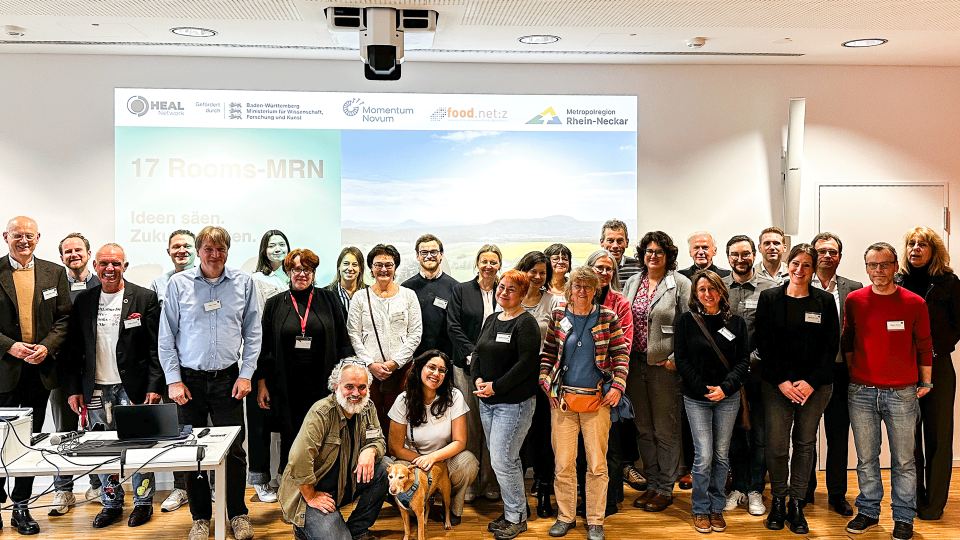
Urgent action is needed to address interconnected food system challenges ranging from food insecurity and rising costs to climate change. As part of the Health-oriented agri-food systems transformation (HEAL) network, we brought together experts from across the food system value chain in the Metropolregion Rhein-Neckar (MRN) to discuss key actions we can take in the next 12-18 months to help transform MRN’s food system into one that is healthier, more sustainable and fairer. Based on a one-day 17 Rooms Workshop format that incorporates a UN Sustainable Development Goals-based perspective, workshop participants outlined concrete ideas covering feasible near-term actions for long-term transformation, with actions identified in five complementary areas:
1. target group-specific educational tools and opportunities,
2. networking and collaboration opportunities,
3. sustainable business models and innovative financial solutions,
4. data access and responsibilities, and
5. food waste in institutional catering settings.
HEAL‘s aim with this report is to provide motivation for turning these action items into strategies and implementing them in MRN.
Funded under the Ministry of Science, Research and Arts Baden-Württemberg’s BEGIN program, the HEAL project represents upstream and downstream research and practice along the agri-food systems value chain. HEAL’s transdisciplinary team supports Baden-Württemberg’s health, digital and bioeconomy goals while integrating health-oriented agri-food systems transformation into the European research ecosystem.
HEAL is conducting a series of pilot studies to test innovative approaches to tackling these food systems issues. In this context, HEAL implemented a regional-level 17 Rooms Workshop bringing together diverse stakeholders across the food value chain to discuss near-term actions for healthier, more sustainable, fairer food systems transformation in practice. The results of these studies support longer-term planning for networking and seeking large-scale grants for carrying out this work as well as provide local, regional and state entities inputs for their own sustainability strategy development.
The 17 Rooms-MRN workshop was co-designed, organized and implemented in cooperation with Momentum Novum strategy consultancy, and held in cooperation with Rhine-Neckar Regional Association and food.net:z - Lebensmittelnetzwerk Rhein-Neckar e.V.
Downlaod the HEAL17-Rooms MRN report
For further information:
Health-oriented agri-food systems transformation (HEAL) network
Disclaimer: The findings reflect the views of the report authors and not necessarily those of the funding body.